
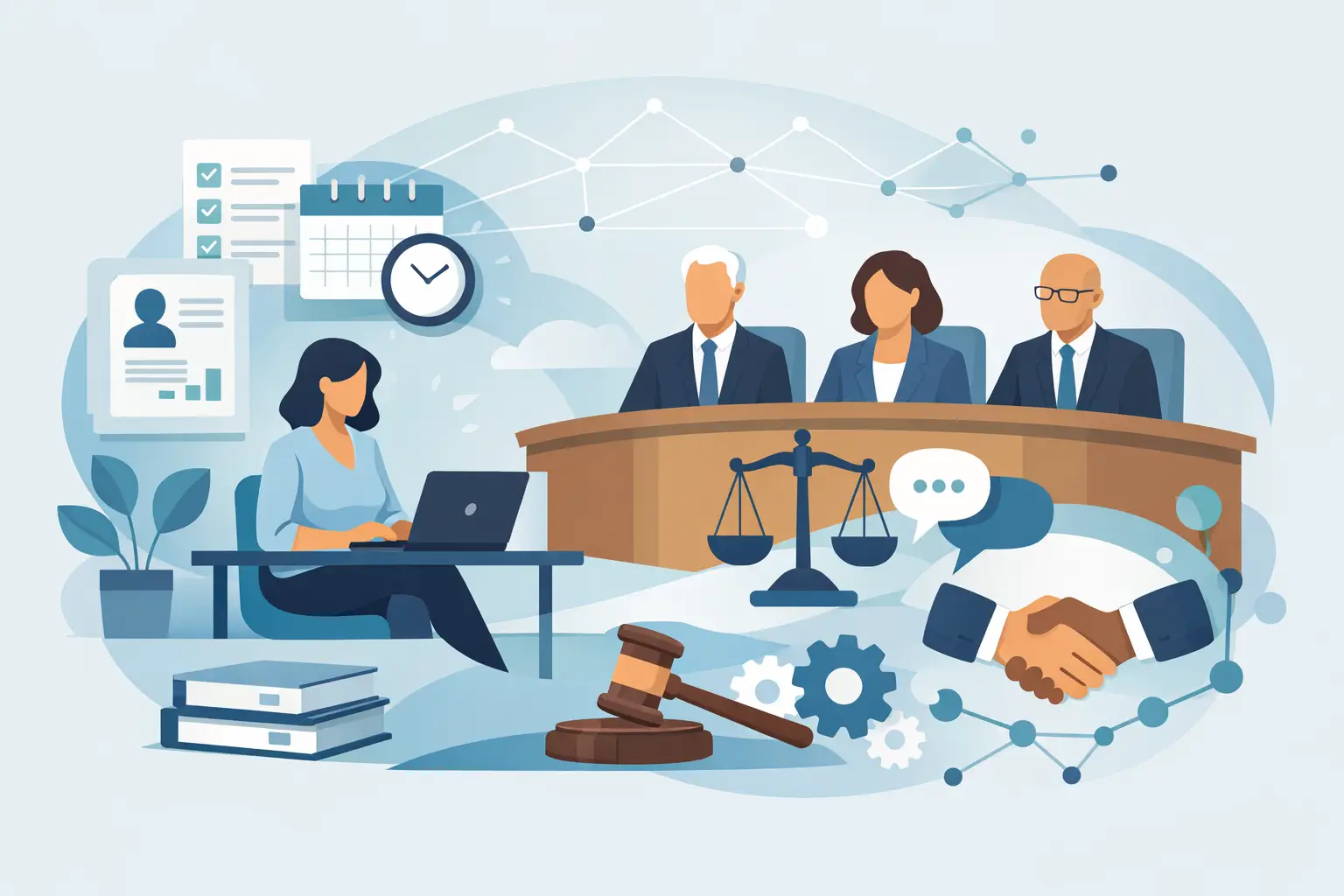
When a hearing date is fixed, weaknesses in process become visible very quickly. Missing witness papers, version confusion, late bundle changes and incomplete decision records are rarely caused by lack of effort. More often, they come from work being spread across inboxes, shared drives and disconnected documents. That is precisely the problem panel hearing management software is designed to solve.
For organisations running disciplinary, regulatory or professional conduct proceedings, the issue is not simply administration. It is defensibility. A hearing process has to be orderly, consistent and capable of scrutiny after the event. If evidence handling is unclear or panel papers are assembled manually under pressure, operational inefficiency becomes governance risk.
Why panel hearing management software matters
A formal hearing sits at the end of a longer case journey. Before the panel meets, someone has already logged a referral, assessed jurisdiction, gathered evidence, recorded witness accounts, tracked deadlines and prepared the bundle. If those stages are handled in different systems, the hearing inherits every inconsistency created upstream.
That is why panel hearing management software should not be treated as a scheduling tool with a document folder attached. The stronger approach is a single secure platform covering the full case lifecycle. In practice, this means referral intake, investigation management, evidence control, panel coordination, hearing preparation and outcome recording all sit within one structured environment.
For case officers and legal teams, that structure reduces administrative drag. For panel members, it improves the quality and consistency of materials they receive. For the organisation, it creates a reliable audit trail showing how decisions were prepared, supported and recorded.
The operational problems it should fix
The first problem is fragmentation. Many institutions still manage hearings across email chains, spreadsheets, local folders and templates stored in multiple places. That can work for a small caseload, but it becomes fragile as volume, complexity or sensitivity increases. Staff absence, handovers and urgent timetable changes expose the limits quickly.
The second problem is document control. In a hearing context, there is usually no tolerance for uncertainty about which statement is final, whether exhibits have been added correctly or whether panel members are reviewing the same paginated papers. A system worth adopting needs firm version control, clear access permissions and a reliable method for producing hearing-ready bundles.
The third is visibility. Senior case owners often need to know where matters stand without chasing updates manually. Which cases are hearing-ready, which still need witness evidence, which outcomes remain unsigned, and which deadlines are at risk? Software should answer those questions directly, not require a separate reporting exercise.
The fourth is compliance. Sensitive allegations, special category data and confidential witness material require more than convenience-based tools. Security architecture, auditability and data handling controls are not secondary procurement questions. In many sectors, they are central to whether a platform is suitable at all.
What good panel hearing management software looks like
The best systems are designed around procedural work rather than generic task management. That distinction matters. A hearing process is built on formal steps, evidential integrity and role-based responsibilities. Software needs to reflect that reality.
A useful platform will structure each case from intake onwards, so hearing preparation is not a standalone scramble at the end. Evidence should be attached to the case record with clear metadata, chronology and status. Witness material should sit within the same environment as referral papers, investigation notes and procedural correspondence. Panel appointments and hearing dates should connect to the case itself rather than live in separate calendars and email threads.
Hearing bundle production is another important test. If a system still requires teams to export everything and rebuild the pack manually elsewhere, much of the efficiency is lost. Strong panel hearing management software should support professionally presented bundle creation within the case workflow, with less dependence on reformatting, chasing attachments and checking pagination by hand.
Outcome recording also deserves more attention than it often gets. The hearing is not finished when the meeting ends. Findings, sanctions, rationale, notifications and any follow-on actions need to be recorded in a way that is complete and reviewable. That record may later be examined during appeal, audit, internal governance review or external challenge.
Security and compliance are product requirements, not extras
In high-sensitivity casework, software selection should start with security posture. A capable interface is useful, but not if the underlying controls are weak.
Organisations handling disciplinary and investigatory matters should expect encryption standards appropriate to the data involved, comprehensive audit trails and clear role-based access controls. They should also ask harder questions about data residency, AI processing and retention. Where is the infrastructure based? How is customer data protected? Is data used to train models? Can the supplier evidence its position in relation to UK and EU GDPR expectations?
These are not theoretical concerns. A hearing file may contain health data, safeguarding material, confidential employment information or allegations with serious reputational consequences. Systems built for sensitive data from day one will handle those risks differently from generic platforms retrofitted for legal-tech use later.
This is one area where procurement discipline pays off. If a supplier cannot give a precise answer on encryption, auditability or AI data handling, the organisation may be assuming unnecessary risk before the first case is even opened.
The role of AI in hearing preparation
AI has become a common software claim, but hearing teams should evaluate it carefully. The relevant question is not whether a platform includes AI. It is whether the AI reduces preparation time without weakening control.
Used properly, embedded AI can assist with labour-intensive tasks such as drafting witness statements from source material, building chronologies, cross-checking accounts for inconsistencies and generating referral reports. Those are genuine operational gains for case teams under pressure.
However, the value depends on governance. AI outputs must remain reviewable, attributable and contained within a secure workflow. For regulated organisations, an attractive feature set is not enough if the underlying processing model is opaque. A disciplined platform will make clear that customer data is protected, retained appropriately and not repurposed for model training.
That balance matters. Hearing preparation benefits from speed, but never at the expense of evidential reliability or confidentiality.
When software is the wrong fit
Not every organisation needs a dedicated hearing platform immediately. If hearings are extremely rare, low-risk and administratively simple, a lighter process may still be workable. The costs and change management involved in adopting specialist software should be justified by caseload, complexity or risk exposure.
Equally, software will not repair a fundamentally unclear procedure. If referral routes, evidential standards, decision authority or template structures are inconsistent, digitising the chaos only makes it faster. The best implementations happen where the organisation has a defined process and wants stronger control, better visibility and less manual effort.
So the decision is not only about features. It is also about process maturity and institutional need.
How to assess panel hearing management software
A sensible assessment starts with the full workflow, not the hearing day itself. Ask how the system handles referral intake, evidence capture, witness material, case progression, panel coordination, bundle production and outcome recording as one connected process.
Then test the product against realistic scenarios. Can it manage late evidence without confusion? Can access be restricted appropriately for panel members, administrators, legal advisers and investigators? Can it preserve a clear record of who did what and when? Can hearing papers be produced to a professional standard without extensive manual rework?
Finally, examine the compliance position in detail. For UK and EU institutions, that includes GDPR alignment, encryption standards, audit trails and clarity on AI infrastructure. A platform such as Endaxi Brief is compelling where organisations need structured case administration and AI-assisted preparation within a secure, auditable environment built for formal investigations and hearings.
The strongest buying decisions are usually made by teams who recognise that hearings are not isolated events. They are the visible stage of a wider case process, and weak administration earlier in that process usually resurfaces at the most sensitive moment.
Panel hearing management software earns its place when it brings order to that entire chain – not just by helping teams work faster, but by making the process more consistent, more secure and easier to defend when scrutiny arrives.