
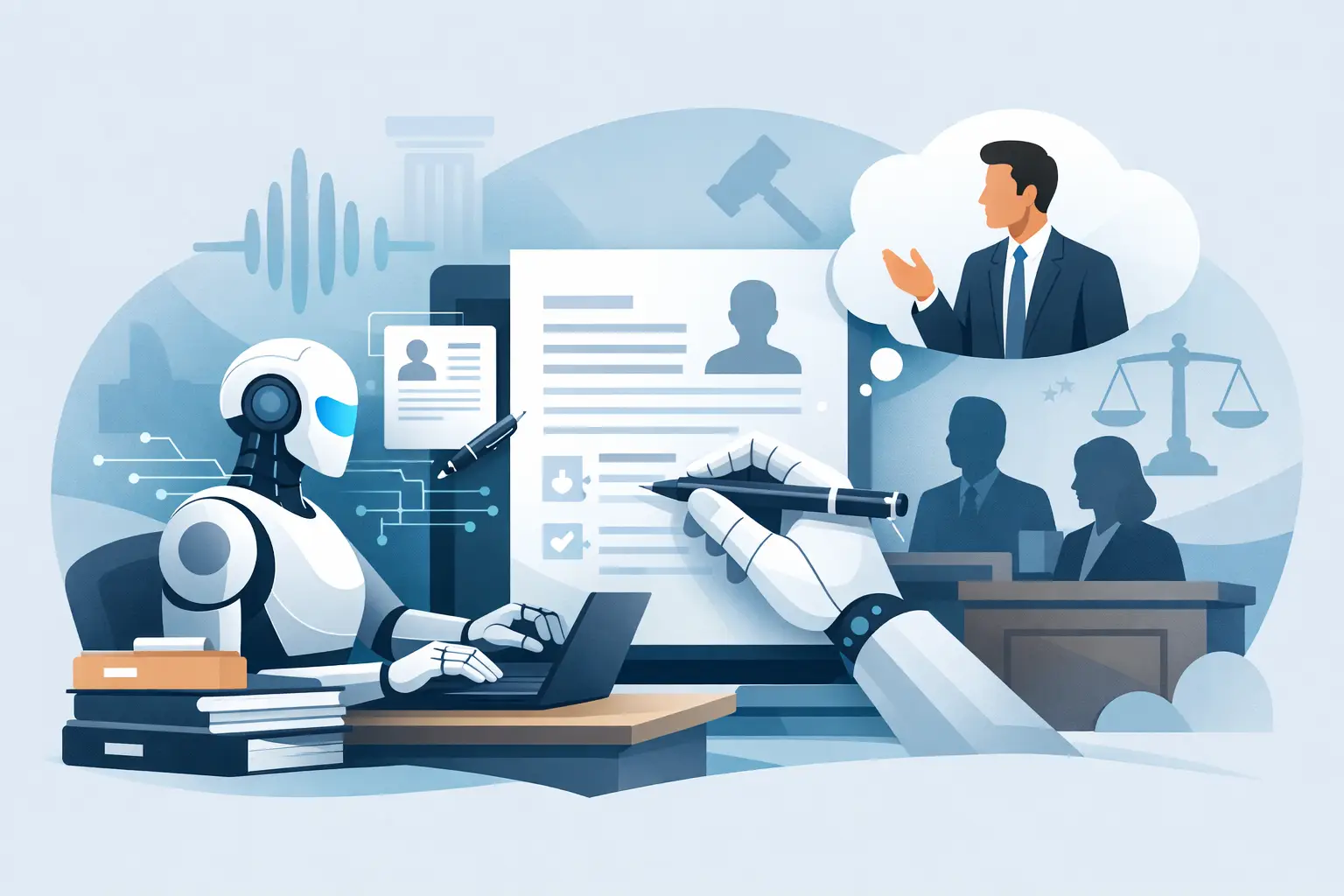
A witness statement can be decisive long before a hearing begins. It establishes the account that will be tested against contemporaneous records, other witnesses and the applicable rules. That is why the question, can AI draft witness statements, needs a more careful answer than a simple yes or no.
AI can assist with drafting a witness statement from approved case material. It cannot give evidence, determine what a witness remembers, or replace the careful work of confirming that a statement is accurate, voluntary and expressed in the witness’s own words. Used within a controlled process, it can reduce administrative effort while preserving the safeguards that make a statement reliable and defensible.
For organisations handling disciplinary matters, workplace investigations and regulatory cases, the distinction matters. The objective is not faster text generation in isolation. It is a more controlled route from evidence to a reviewed, attributable and hearing-ready document.
Can AI Draft Witness Statements Reliably?
AI can produce a useful first draft when it is given a clear instruction and a defined set of source materials, such as interview notes, a transcript, chronology, referral documentation and relevant exhibits. It can organise information into a formal statement structure, identify dates and events mentioned in the record, and present a coherent account for review.
That is valuable where case teams face repeated drafting tasks across a high volume of matters. A case officer may otherwise need to compare several pages of notes with emails, meeting records and policy documents before preparing a first version. AI can shorten this preparation stage and help create consistency in format.
Reliability depends on the quality and limits of the source material. An AI-generated draft may misstate a date, combine details from separate events, overlook uncertainty in an account or present an inference as fact. These are not minor drafting defects. In a formal process, they can affect fairness, credibility and the weight placed on the evidence.
The appropriate use case is therefore assisted drafting, not automated evidence creation. The witness remains responsible for their evidence. The investigator or case officer remains responsible for ensuring that the document accurately reflects the witness’s account. Legal advisers and decision-makers retain their respective roles in assessing relevance, procedure and evidential weight.
What AI Should and Should Not Do
A controlled AI workflow should work from the case record rather than from unsupported prompts or general assumptions. It can help turn material already held by the organisation into a structured draft. It should not fill gaps in that material with plausible language.
A sound draft distinguishes clearly between what the witness observed, what they were told, what is recorded in an exhibit and what they do not recall. Where the underlying notes contain uncertainty, the draft should preserve it. Phrases such as “to the best of my recollection” or “I cannot now recall” may be necessary where they reflect the witness’s actual position, rather than being removed in pursuit of a smoother narrative.
AI is particularly useful for practical preparation tasks. It can arrange an account chronologically, apply a consistent statement template, create exhibit references, highlight apparent inconsistencies with prior accounts and identify points that require clarification at a follow-up meeting. These functions support professional judgement rather than substituting for it.
It should not be used to coach a witness, embellish their account, produce a statement without source material, or decide whether an allegation is proven. Nor should an unreviewed output be issued to a witness or included in a hearing bundle. The more serious the potential outcome, the stronger the review controls should be.
A Defensible Assisted-Drafting Process
The strongest approach is to make AI drafting one step in a visible case workflow. Case teams need to be able to show where the draft came from, which materials informed it, who reviewed it and what changed before the final version was approved.
Start with an established evidential record
Before generating a draft, the case record should be organised. Interview notes should identify the interviewer, date, attendees and method of recording. Relevant emails, documents, photographs, messages and prior statements should be stored against the case with clear labels and access controls.
This preparation is not optional administration. If source material is incomplete or poorly indexed, an AI tool may produce a polished document that conceals an unreliable evidential foundation. A structured chronology can be especially useful at this point, allowing the case officer to test dates and sequence before a narrative statement is prepared.
Generate a draft with defined instructions
The drafting instruction should set clear boundaries. It should specify the source documents to use, the required format, the intended audience and the need to avoid adding facts or conclusions not found in the materials. It should also direct the system to flag uncertainty, conflicting accounts and missing information rather than attempting to resolve them.
A statement is not simply a summary. It should reflect the witness’s own knowledge in a clear sequence, separate direct observation from second-hand information where relevant, and refer accurately to supporting documents. Those requirements should be built into the template and prompt design, not left to chance.
Conduct human and witness review
A trained case officer, investigator or legal adviser should compare the draft against the underlying record. They should check names, dates, quotations, document references, attribution and language that could overstate certainty. Any apparent inconsistency should be investigated, not silently corrected.
The witness must then have a genuine opportunity to read the statement, request amendments and confirm that it is true to the best of their knowledge and belief. This review is where the process returns fully to the person giving the evidence. A witness should never be asked simply to endorse text because it appears professionally written.
Preserve versions and approvals
Version control is essential. The final record should show the source materials used, the draft version, substantive edits, witness confirmation and approval status. In contested proceedings, that audit trail can demonstrate that the organisation followed a fair and disciplined process.
A single secure platform is preferable to circulating drafts through uncontrolled inboxes or saving copies across personal drives. It reduces the risk that an outdated statement is included in a bundle, that sensitive evidence is accessed by the wrong person or that case teams cannot identify the authoritative version.
Security and Data Protection Are Part of the Decision
Witness statements often contain special category personal data, allegations, health information, safeguarding details and confidential employment information. An organisation should not treat the choice of AI drafting tool as a general productivity decision. It is a data handling and governance decision.
Before adopting any tool, case owners should establish where data is processed, whether it remains within an appropriate European infrastructure, how it is encrypted, who can access it and whether the provider retains prompts or documents. They should also understand whether customer data is used to train models. For sensitive proceedings, the answer should be clear, documented and aligned with the organisation’s UK GDPR and EU GDPR obligations where applicable.
Access should follow the case role. An investigator may need to prepare a draft, a legal adviser may need review access, and panel members may only need the approved statement within the hearing bundle. Granular permissions, AES-256-GCM encryption and a complete audit trail are operational controls, not technical extras.
Endaxi Brief applies this principle across the full case lifecycle, allowing authorised users to prepare AI-assisted documents within the same controlled environment used for evidence, chronologies, bundles and outcome records. Its AI processing is designed for sensitive data from day one, with customer data not retained by AI systems or used to train models.
Where Institutions Need Particular Caution
The case context affects whether AI-assisted drafting is appropriate and how closely it should be supervised. In a straightforward matter with a recorded interview and limited documentary evidence, a draft may be an efficient starting point. In a safeguarding case, a matter involving vulnerable witnesses, or an allegation carrying serious professional or reputational consequences, the process may require more intensive human preparation and review.
Care is also required where a witness has communication needs, uses an interpreter, is distressed, or has provided an account over several meetings. A fluent draft can unintentionally standardise language that is meaningful to the witness or erase qualifications that need to remain visible. The document must still be accessible, accurate and genuinely theirs.
AI can help case teams spend less time reformatting information and more time testing it properly. The practical test is simple: if the organisation cannot explain the source, review and approval of each material statement, the draft is not ready for the witness or the hearing bundle.
A well-governed system should make that explanation easier, leaving professionals with the time and control needed to prepare evidence that can withstand scrutiny.